Our work, all of it on Saskatchewan land.
Native grassland and wetland hold most of the wildlife on the northern Great Plains. We reseed prairie, refill drained wetlands, and count the species that depend on both, on land whose owners asked us in.
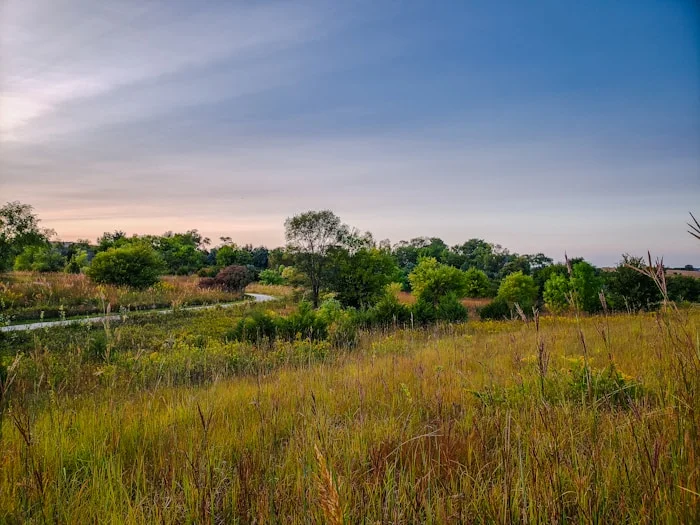
Bringing back native prairie
Saskatchewan has lost more than 80 per cent of its native grassland since European settlement. What is left is one of the most threatened habitats on the continent.
We reseed cultivated and degraded land with native grasses, sedges, and wildflowers grown from local ecotype seed: seed collected from remnant prairie in the same region, so the plants are already suited to the soil and climate. We do not use agricultural species or commercial seed mixes.
How a restoration runs
- Collect seed from remnant prairie nearby.
- Prepare the land, usually over a full season.
- Seed a species mix matched to the site.
- Monitor for five years and publish the results.
We work only with willing landowners, at no cost to them. The acreage restored so far is in the dated ledger on the About page.
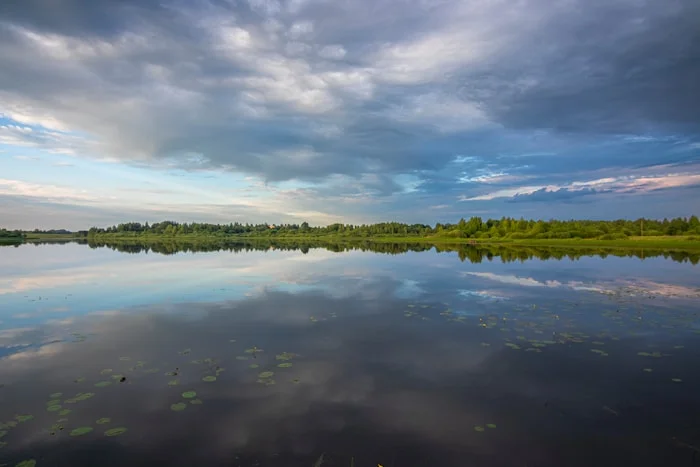
Refilling the prairie pothole
Prairie potholes are shallow basins left by the glaciers, and they are the nurseries of North American waterfowl. More than 70 per cent of Saskatchewan's potholes have been drained for farming since the 1950s.
We work with landowners to plug drainage ditches and tile, let the water table come back, and reseed the margins with native wetland plants from local sources. A refilled pothole recharges the aquifer under it and gives dozens of species a place to breed. As of the 2025 field season we have restored 24 of them.
Birds breeding on restored potholes
Our surveys have recorded canvasback, redhead, ruddy duck, American avocet, Wilson's phalarope, Franklin's gull, and yellow-headed blackbird.
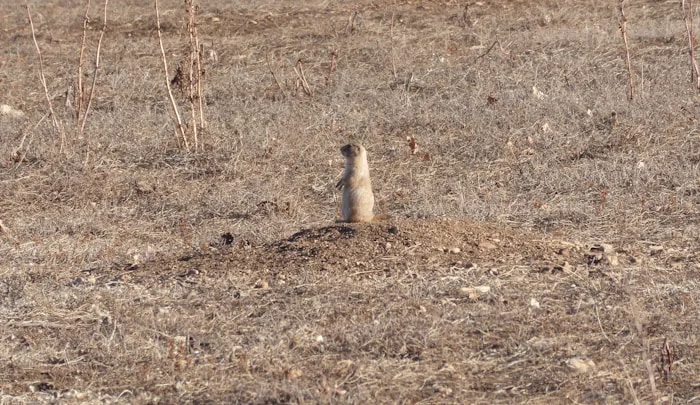
Counting what is left
Every spring and summer we survey plants and wildlife on each active site, using protocols developed with ecologists at the University of Regina.
We publish our survey results each year; the papers are listed on the About page. The data belongs to the public, so there are no paywalls and no embargo periods. Our counts feed provincial species-at-risk assessments and COSEWIC, the federal committee that assesses species at risk.
At-risk species we monitor
Each species has its own standard protocol. Observers walk fixed, GPS-marked transects (straight survey lines across a site), and we compare the counts year over year.
- Burrowing owl
- Ferruginous hawk
- Loggerhead shrike
- Swift fox
- Sprague's pipit
- Baird's sparrow
- Greater sage-grouse
- Monarch butterfly
- Hairy prairie-clover
- Plains rough fescue
Help us do more of this
This work runs on landowners who say yes, volunteers who seed and count, and donors who pay for the seed.